









Fusion Energy Nears Commercial Viability
In the rapidly evolving landscape of energy production, fusion energy stands out as a beacon of hope for a sustainable future. As of October 2025, significant strides have been made toward making this once-distant dream a practical reality. Fusion, the process that powers the sun and stars, promises unlimited clean energy without the drawbacks of fossil fuels or the long-term waste issues associated with traditional nuclear fission. This article explores the journey toward commercial viability, highlighting breakthroughs, challenges, and the potential global impact. With billions in investments pouring in and pilot plants on the horizon, fusion is no longer just a scientific curiosity but a burgeoning industry poised to transform how we power the world.
Understanding Fusion Energy Basics
Fusion energy involves combining light atomic nuclei, typically isotopes of hydrogen like deuterium and tritium, to form heavier elements such as helium. This reaction releases enormous amounts of energy in the form of heat, which can then be converted into electricity. Unlike fission, which splits atoms and produces radioactive waste, fusion generates minimal waste and uses abundant fuels—deuterium can be extracted from seawater, and tritium can be bred from lithium.
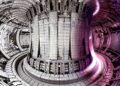
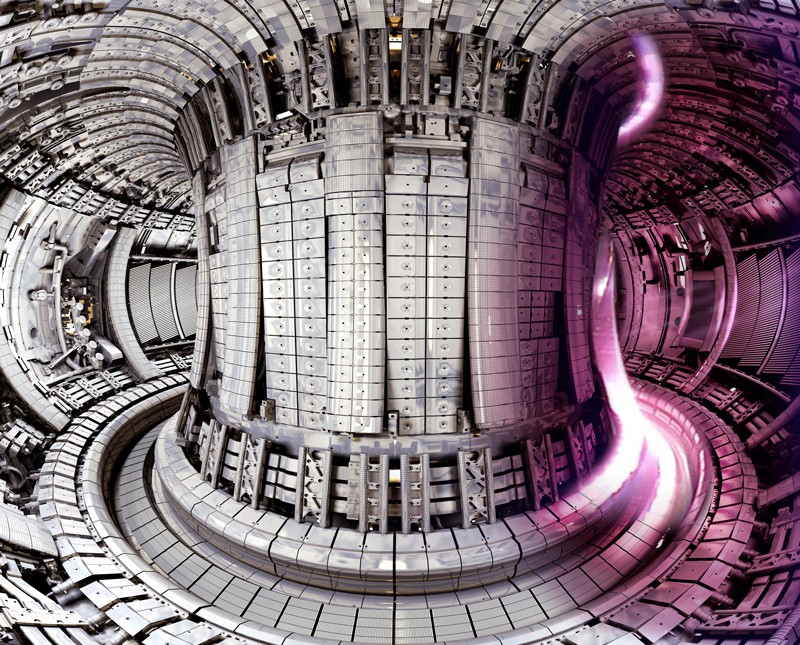
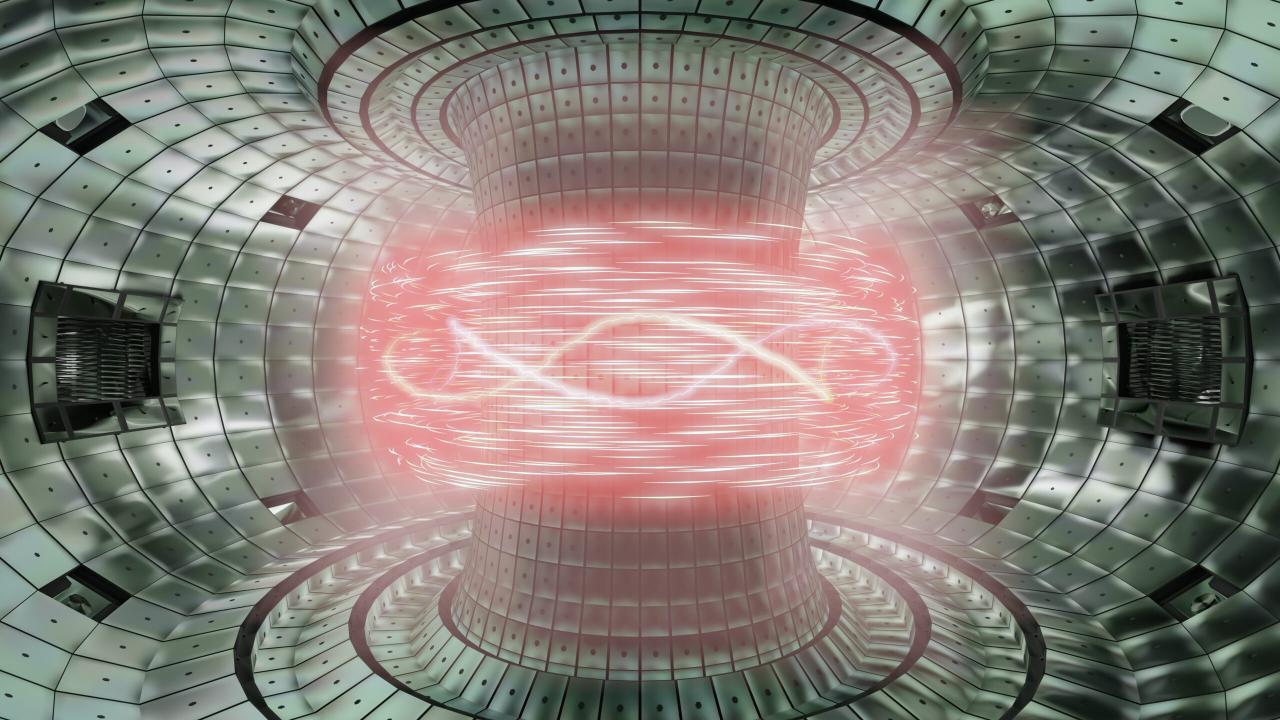
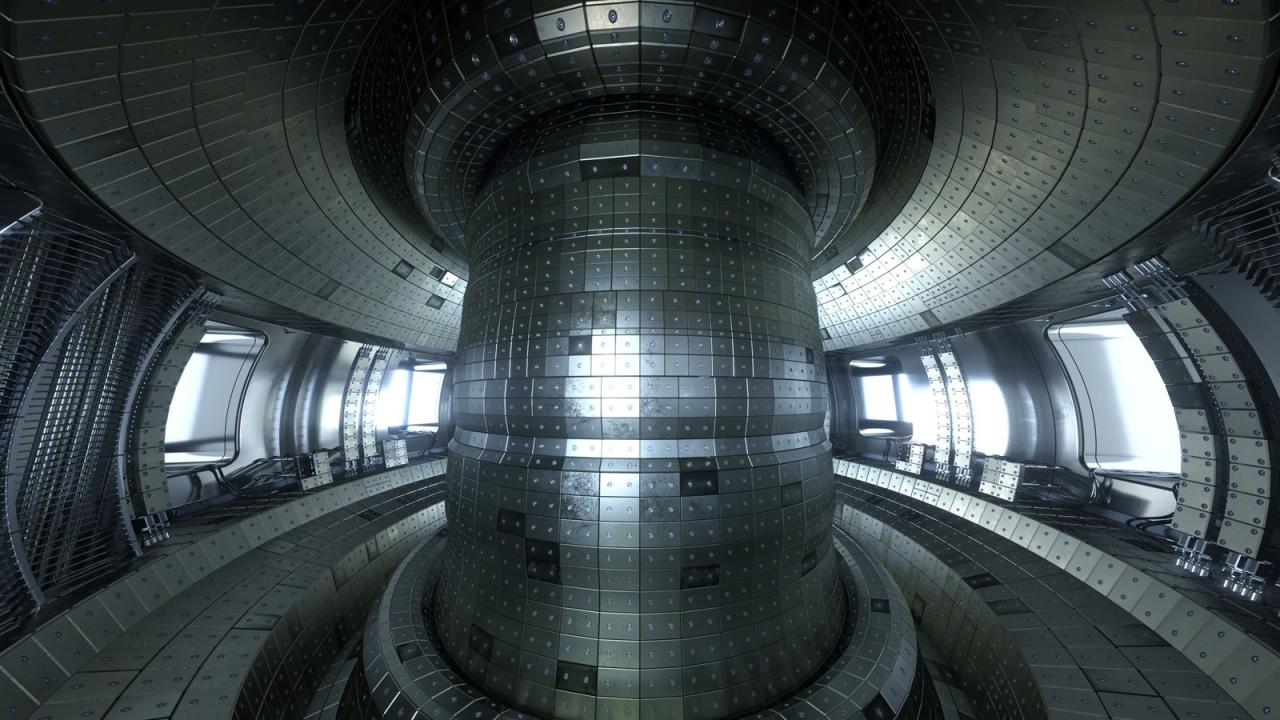
The core challenge has always been achieving and sustaining the extreme conditions required: temperatures exceeding 100 million degrees Celsius, high pressures, and magnetic confinement to keep the plasma stable. Devices like tokamaks and stellarators are designed to contain this superheated plasma, preventing it from touching the reactor walls and melting them. Recent innovations in materials science, such as high-temperature superconductors, have dramatically improved efficiency and reduced costs.
To put it simply, fusion mimics the sun’s core on Earth. When successful on a commercial scale, it could provide baseload power that’s carbon-free, safe, and inexhaustible. Experts predict that once viable, fusion plants could operate continuously, unlike intermittent renewables like solar or wind, complementing them in a diversified energy grid.
The Historical Path to Fusion
The quest for fusion energy dates back to the mid-20th century. In the 1950s, scientists in the United States, Soviet Union, and Europe began experimenting with plasma physics, leading to the development of the first tokamak in the 1960s by Soviet researchers. This doughnut-shaped device became the standard for magnetic confinement fusion.
International collaboration accelerated in the 1980s with the formation of the International Thermonuclear Experimental Reactor (ITER) project, involving 35 nations including the US, EU, China, India, Japan, Korea, and Russia. ITER, under construction in France, aims to demonstrate net energy gain by the mid-2030s. However, delays and cost overruns—now exceeding $20 billion—highlighted the complexities involved.
In the private sector, the 2010s saw a surge in startups fueled by venture capital. Companies like Tri Alpha Energy (now TAE Technologies) explored alternative approaches, such as field-reversed configurations. A pivotal moment came in December 2022 when the National Ignition Facility (NIF) in the US achieved scientific breakeven—producing more energy from fusion than was input via lasers. This inertial confinement method, while not directly scalable for power plants, boosted confidence in the field.
By the early 2020s, funding exploded. The Fusion Industry Association reported over $6 billion in private investments by 2024, growing to $9.7 billion by mid-2025. Governments also ramped up support; the US Department of Energy allocated $134 million in September 2025 to advance fusion leadership. These efforts have shifted fusion from theoretical research to engineering-focused commercialization.
Breakthroughs in 2025 Propelling Commercialization
2025 has been a landmark year for fusion advancements. Multiple records were shattered, bringing commercial viability closer. For instance, China’s Experimental Advanced Superconducting Tokamak (EAST) sustained plasma at 100 million degrees Celsius for over 1,000 seconds, a step toward continuous operation. Similarly, Korea’s KSTAR achieved 48 seconds at similar temperatures, with plans for 300 seconds by 2026.
In the US, the Lawrence Livermore National Laboratory repeated net-positive ignition shots, validating inertial fusion’s potential. Private firms made headlines too: Commonwealth Fusion Systems (CFS) raised $863 million, backed by Nvidia and Google, to build its SPARC tokamak, targeting net energy by 2027. CFS’s high-temperature superconducting magnets reduce reactor size and cost by 50%, making plants more affordable.
Helion Energy began constructing its Polaris prototype in Washington, aiming for electricity generation by 2028 using aneutronic fusion with helium-3, which allows direct energy conversion for higher efficiency. Zap Energy demonstrated three hours of continuous operation, validated by the DOE, focusing on sheared-flow stabilized Z-pinch technology that’s simpler and cheaper than tokamaks.
Europe isn’t lagging; the UK’s STEP program and Germany’s Proxima Fusion are developing open-source stellarators, which offer superior plasma stability. Stellarators, like the Wendelstein 7-X, sustained 59 megajoules for eight minutes, proving their edge over tokamaks in avoiding disruptions.
These milestones indicate that fusion is transitioning from lab experiments to prototype plants. Analysts from IDTechEx forecast the fusion market to grow exponentially, with timelines for commercial reactors between 2030 and 2045.
Leading Players in the Fusion Arena
The fusion ecosystem is diverse, with public-private partnerships driving progress. Here are some key contributors:
A. Commonwealth Fusion Systems (CFS): Based in Massachusetts, CFS is a spin-off from MIT. Their SPARC reactor uses advanced magnets to achieve fusion conditions at a fraction of ITER’s size. In 2025, CFS secured a billion-dollar deal with Eni for electricity from a future plant in Virginia, despite the reactor not yet existing.
B. Helion Energy: Focused on pulsed fusion, Helion’s approach compresses plasma to fusion temperatures. Construction of their power plant started in July 2025, with Microsoft as a buyer for future output.
C. Zap Energy: Utilizing Z-pinch technology, Zap offers a compact, cost-effective design without complex magnets. Their three-hour continuous run marks a reliability milestone.
D. TAE Technologies: Pioneers in field-reversed configuration, TAE halved reactor costs through optimized plasma formation, as detailed in a Nature Communications study.
E. Proxima Fusion: A German startup working on stellarators, aiming for a prototype by 2028 with quasi-isodynamic fields for better stability.
F. Energy Singularity: A Chinese firm raised $1 billion for a compact reactor, 90% smaller and 95% cheaper than traditional designs.
G. ITER and National Labs: While slower, these provide foundational research, with ITER set for first plasma in 2025-2026.
H. Other Notables: Thea Energy, Type One Energy, and Neo Fusion are exploring hybrid and innovative designs, targeting Q=5 (five times energy output over input) for stable burns.
These entities represent a global race, with China expecting commercialization by 2050 via HL-3, but private firms pushing for earlier timelines.
Overcoming Technical and Economic Hurdles
Despite optimism, challenges remain. Achieving net electrical power—not just net energy from plasma—is crucial. Current demos produce heat, but converting it efficiently to grid power requires advanced turbines and materials resistant to neutron bombardment.
Supply chain issues for rare materials like tritium pose risks, as does regulatory frameworks. Fusion plants must prove safety to gain public trust, though they lack meltdown risks like fission reactors.
Economically, initial costs are high, but projections show fusion could become the cheapest reliable power source. A study on commercial aspects suggests hydrogen production as an alternative revenue stream. Engineering problems and a small academic ecosystem could delay progress, but AI and computing advancements are accelerating designs.
Funding is a double-edged sword; while billions flow in, expectations must be managed. As one expert noted, “They don’t have a reactor yet,” emphasizing the gap between milestones and full plants.
Environmental and Societal Benefits
Fusion’s appeal lies in its environmental profile. It produces no CO2 emissions, minimal waste, and uses fuels abundant for millions of years. Deployed at scale, it could secure energy independence, stabilize grids, and combat climate change.
For developing nations, fusion means leapfrogging fossil fuels. In data centers and AI, where energy demand surges, fusion offers reliable power without environmental guilt. Big Tech’s investments underscore this; Google’s involvement signals fusion’s role in powering future innovations.
However, equitable access is key. Policies must ensure fusion benefits all, not just wealthy nations.
Conclusion
By 2030, expect first commercial pilots from leaders like CFS and Helion. China aims for viable production before 2040 via new facilities. Global markets could reach trillions by 2046, revolutionizing energy.
Fusion complements renewables, providing firm power for a net-zero world. As US Energy Secretary Chris Wright stated, it could soon power the globe. Yet, balanced investment in existing tech like wind and solar remains vital.
In conclusion, fusion energy is nearing commercial viability, driven by innovation and investment. While hurdles persist, the momentum suggests a brighter, cleaner energy era ahead.