










In the fast-paced world of industrial production, technological advancements have always served as the backbone of progress.
Among these, robotics stands out as a game-changer, fundamentally altering the way factories operate and products are assembled.
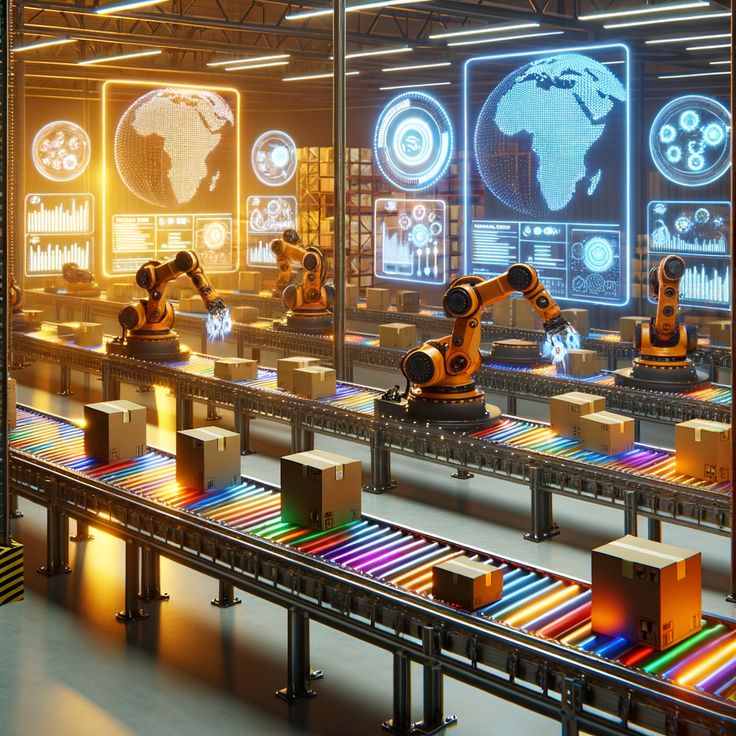
Once confined to science fiction narratives, robots now pulse through assembly lines, wielding precision tools and making split-second decisions that outpace human capabilities.
This shift isn’t merely about replacing manual labor; it’s about elevating the entire manufacturing ecosystem to new heights of reliability, speed, and innovation.
As global demands for customization and sustainability intensify, robotics emerges as the linchpin, redefining what it means to produce at scale while minimizing waste and maximizing output.
The manufacturing sector, valued at trillions globally, faces mounting pressures from supply chain disruptions, labor shortages, and the relentless push for eco-friendly practices.
Enter robotics: a symphony of mechanical arms, sensors, and algorithms that harmonize to streamline operations.
From automotive giants churning out vehicles to electronics firms crafting intricate circuits, these automated marvels are not just tools—they’re architects of a smarter, more resilient industry.
This article delves deep into how robotics is reshaping manufacturing norms, exploring its historical roots, tangible advantages, diverse applications, and the horizon ahead.
By weaving together efficiency gains with forward-thinking strategies, we’ll uncover why embracing robotics isn’t optional but essential for staying competitive in 2025 and beyond.
The Historical Journey of Robotics in Production
To appreciate robotics’ current dominance, one must trace its origins back to the mid-20th century. The first industrial robot, Unimate, debuted in 1961 at a General Motors plant, where it handled die-casting tasks too hazardous for workers.
This rudimentary machine marked the dawn of automation, evolving through decades of refinement. Early models were rigid, programmed for single repetitive actions, but the 1980s brought microprocessors, enabling more versatile operations like welding and painting.
By the 2000s, the integration of software advancements transformed robots into adaptable partners.
The rise of collaborative robots, or cobots, in the 2010s further democratized access, allowing safe human-robot teamwork without bulky safety enclosures.
Today, as of 2025, the global robotics market in manufacturing exceeds $20 billion, with projections soaring to $70 billion by 2030, driven by falling hardware costs and AI enhancements.
This evolution reflects a broader narrative: from isolated machines to interconnected systems that learn, adapt, and predict, robotics has transitioned from a luxury to a necessity.
Consider the four generations of industrial robots outlined in industry analyses.
First-generation pneumatics in the 1950s focused on basic handling; second-generation electromechanical units in the 1970s added sensory feedback; third-generation in the 1990s incorporated vision systems for quality checks; and the fourth, ongoing since the 2010s, fuses deep learning for autonomous decision-making.
Each phase has chipped away at limitations, paving the way for today’s hyper-efficient setups. In essence, this progression mirrors manufacturing’s broader metamorphosis—from mass production to agile, data-driven factories.
Unpacking the Core Advantages: Efficiency, Accuracy, and Beyond
At the heart of robotics’ appeal lies a trifecta of benefits: unparalleled efficiency, razor-sharp precision, and bolstered safety protocols. Let’s break these down.
Efficiency begins with robots’ tireless nature. Unlike human workers prone to fatigue, these machines operate 24/7, slashing downtime and accelerating throughput.
In high-volume sectors like electronics, robotic systems can boost production rates by up to 50%, turning weeks-long cycles into days.
This isn’t hyperbole; real-time data processing allows robots to optimize workflows, rerouting materials dynamically to avoid bottlenecks.
Moreover, energy-efficient designs—such as those using regenerative braking in robotic arms—cut operational costs by 20-30% over traditional methods.
Precision follows suit, addressing one of manufacturing’s perennial headaches: variability. Human hands, no matter how skilled, introduce inconsistencies from tremors or lapses in focus.
Robots, governed by algorithms and sensors, achieve tolerances as fine as 0.01 millimeters, crucial for industries like aerospace where a micron’s deviation spells disaster.
Vision-enabled robots, for instance, scan components at microscopic levels, flagging defects invisible to the naked eye and ensuring 99.9% quality yields.
This not only minimizes rework but elevates brand trust through flawless outputs.
Safety, often the unsung hero, rounds out the advantages. Factories teem with risks—heavy loads, toxic fumes, repetitive strains—but robots shoulder these burdens.
Equipped with proximity sensors and force-limiting tech, cobots halt operations at the slightest human intrusion, slashing injury rates by 70% in collaborative environments.
Beyond immediate protection, predictive analytics in robotic fleets forecast equipment failures, preventing accidents before they occur.
These perks compound: lower insurance premiums, higher morale, and a pivot toward value-added human roles like oversight and innovation.
Yet, the advantages extend further. Cost savings materialize over time, with ROI often recouped within 18-24 months through reduced scrap and labor overheads.
Sustainability gains are equally compelling; robots optimize material use, curbing waste by 40% in processes like metal forging via laser-guided “robotic blacksmithing.”
In an era where eco-regulations loom large, this positions robotics as a green ally, aligning profitability with planetary stewardship.

A Spectrum of Robotic Innovations in Action
The robotics arsenal is vast, each type tailored to specific manufacturing niches. Understanding these variants is key to strategic deployment.
A. Articulated Robots: Mimicking human arms with multiple rotary joints, these six-axis wonders excel in welding and assembly. Their wide range of motion makes them staples in automotive lines, where they fuse chassis components with unerring accuracy.
B. SCARA Robots: Selective Compliance Articulated Robot Arms prioritize speed in horizontal tasks, ideal for pick-and-place in electronics. Their four-axis design delivers rapid, precise insertions, revolutionizing circuit board population.
C. Cartesian Robots: Operating on linear rails, these gantry-style machines handle large payloads in a defined rectangular space. They’re perfect for 3D printing or palletizing bulky goods, offering stability for oversized workpieces.
D. Delta Robots: With parallel linkages, they achieve blistering speeds—up to 300 picks per minute—for packaging in food and pharma. Their overhead configuration minimizes floor space, a boon in cramped facilities.
E. Collaborative Robots (Cobots): The human-friendly face of robotics, cobots integrate force sensors for safe coexistence. In textile inspection, they scan fabrics alongside operators, detecting flaws while allowing intuitive adjustments.
F. Autonomous Mobile Robots (AMRs): AI-navigated wanderers, AMRs shuttle materials across warehouses without fixed paths. In logistics-heavy manufacturing, they reduce transport times by 30%, enhancing just-in-time inventory.
G. Machine Vision Robots: Fusing cameras with AI, these sentinels perform quality audits in real-time. In tire production, they scrutinize cord strength and coatings, ensuring durability standards are met preemptively.
This diversity underscores robotics’ adaptability, allowing bespoke solutions that scale from SMEs to conglomerates. Selection hinges on factors like payload (up to 18 kg for mid-range models), reach (1-2 meters), and environmental resilience, ensuring seamless fit within existing setups.
Synergizing Robotics with Cutting-Edge Tech
Robotics doesn’t thrive in isolation; its true power amplifies through fusion with AI, IoT, and beyond. AI infuses robots with “human-like reasoning,” enabling on-the-fly adaptations—like tweaking weave tension in textiles based on humidity fluctuations.
Machine learning algorithms process vast datasets, predicting optimal parameters and self-optimizing over iterations.
IoT weaves a digital fabric, connecting robots into an “interconnected ecosystem” for holistic oversight. Sensors relay live metrics—vibration levels, temperature spikes—to cloud platforms, triggering predictive maintenance that averts 80% of unplanned downtimes.
In smart factories, this manifests as “lights-out” operations, where unmanned lines hum efficiently overnight.
Edge computing adds another layer, processing data locally for millisecond responses in high-stakes scenarios, like defect detection in conveyor belts.
Natural language interfaces further humanize interactions; operators issue voice commands, streamlining reprogramming.
These integrations not only boost throughput but foster “mass customization,” where robots pivot between product variants in hours, not weeks—vital for niche markets craving personalization.
Sustainability tech rounds this out: AI-driven energy management in robots cuts consumption by 25%, while swarm robotics—fleets of micro-bots collaborating like ants—tackles eco-cleanups or precision farming tie-ins to manufacturing supply chains.
The result? A symbiotic tech stack that propels manufacturing toward Industry 5.0: human-centric, resilient, and green.
Navigating Hurdles: Challenges and Strategic Remedies
No revolution is without friction. Robotics’ rollout grapples with steep upfront costs—$50,000-$100,000 per unit, plus integration fees—that deter smaller outfits.
Legacy systems pose compatibility quagmires, demanding custom middleware that risks operational hiccups.
Workforce reskilling looms large; traditional machinists must master coding and AI oversight, exacerbating skills gaps in aging demographics.
Maintenance complexities, from sensor calibrations to software updates, can cascade into costly halts if not preempted.
Yet, solutions abound. Modular designs facilitate plug-and-play upgrades, while no-code platforms like those from innovative vendors lower the programming barrier.
Government incentives—tax credits, grants—offset investments, and partnerships with integrators ensure smooth migrations.
Training programs, blending VR simulations with hands-on modules, upskill teams efficiently. For safety, adherence to standards like ISO 10218 guarantees compliance.
By framing challenges as opportunities, manufacturers can accelerate adoption, turning potential pitfalls into competitive edges.
Spotlight on Real-World Transformations
Theory meets practice in riveting case studies. In automotive realms, Ford deploys articulated robots for welding, achieving 99% uptime and slashing defects by 60%—a leap that safeguards lives through impeccable builds.
Electronics titan Samsung harnesses delta robots for high-speed assembly, customizing phone casings on-demand and trimming lead times from days to hours.
Technical textiles offer another lens: Robro Systems’ Kiara Vision inspects airbag fabrics, using AI to spot micro-tears, ensuring crash-test compliance and reducing recalls.
In tire manufacturing, AMRs ferry cords between stations, optimizing flows and cutting energy use by 15%. These vignettes illustrate scalability: from SMEs adopting affordable cobots for bespoke parts to enterprises layering IoT for enterprise-wide analytics.
Even niche applications shine—pharma’s delta bots package sterile vials at blistering paces, upholding hygiene norms; aerospace employs gantry robots for composite layups, precision-forging wings with zero tolerance for error.Metrics speak volumes: adopters report 25-40% productivity surges, underscoring robotics’ ROI in diverse theaters.
Peering into Tomorrow: Emerging Horizons
The robotics frontier brims with promise. Shape-shifting bots, morphing forms for multi-tasking, could dominate versatile lines by 2030.
Swarm intelligence will orchestrate micro-fleets for intricate builds, like 3D-printing organs or eco-materials. Self-healing materials in robots promise extended lifespans, minimizing e-waste.
AI’s ascent heralds “autonomous factories,” where bots self-diagnose and collaborate via gesture or speech. Cloud-edge hybrids will democratize access, letting SMEs tap enterprise-grade smarts.
Miniaturization targets micro-assembly in biotech, while sustainability drives bio-inspired designs—soft robotics mimicking octopuses for delicate handling.
Geopolitically, robotics fortifies supply chains against disruptions, enabling reshoring with automated resilience.
By 2040, experts forecast 80% automation in routine tasks, birthing hybrid workforces where creativity reigns. This trajectory isn’t dystopian; it’s empowering, blending machine might with human ingenuity.
Reshaping Jobs and Economies: The Human Element
Robotics’ workforce ripple is dual-edged. Automation displaces rote roles, yet spawns high-skill niches—robotics engineers, data analysts, ethicists—projected to add 2 million jobs by 2027.
Upskilling initiatives, from apprenticeships to online certs, bridge the divide, fostering inclusive growth.
Economically, it’s a boon: enhanced productivity fuels GDP uplifts, with robotics adopters outpacing peers by 15-20% in revenue.
Regions like Germany’s “Industrie 4.0” exemplify this, blending robotics with policy for equitable prosperity.
Challenges persist—inequality risks if access skews to elites—but ethical frameworks, like fair AI governance, can steer toward shared abundance.

Conclusion
Robotics isn’t disrupting manufacturing—it’s elevating it, forging norms that prioritize precision, sustainability, and human potential.
From historical sparks to futuristic swarms, this technology weaves efficiency with innovation, tackling challenges head-on while unlocking untapped horizons.
For leaders, the imperative is clear: invest wisely, train boldly, integrate holistically. In doing so, they don’t just adapt—they architect the factories of tomorrow, where machines amplify dreams and standards soar.
As we stand on October 4, 2025, the robotic revolution beckons. Will your operations heed the call? The assembly lines of the future await those bold enough to program them.